G2 is the largest and most trusted website for software review. For each reviewer, G2 confirms his identity and professional usage of the reviewed software. The Easiest to Use RPA Platforms, based on real users reviews are shown below:

For the first time, a Python-based RPA platform is leading the “Easiest to Use” ranking. BotCity is an RPA platform created for software-based RPA initiatives looking for no vendor lock-in, performance and scalability. Mid-market and enterprise companies are addressing RPA with Python and BotCity or combining them with other RPA platforms.
It might sound counterintuitive that a Python-based platform beats other platforms that promise to make adoption easier using low code. However, low-code makes adoption easy for people who do not know how to code, and RPA initiatives are full of developers.
For software developers, low-code is a constraint that limits how they can use their skills, optimize their solutions, and reuse previous source codes. Low-code is the right choice for generic solutions with some customization that does not make sense. Each one creates your own. However, RPA projects are very specific and look more like custom software development.
6 Reasons Python-based RPA is the Easiest to Use for tech teams
Now, let’s dive into each specific use case and illustrate the benefits of using Python instead of low-code when you have technical squads.
1. Easier for Development. Developers love Python!
It is hard to find an RPA initiative without developers to address edge cases that a pure low-code approach can not. If you have developers who know Python in your RPA initiative, using Python will be easier and faster than learning to use low-code components for every new use case. Even expert developers have a learning curve when using a low-code platform. Your developers have developed many source codes in the past for common use cases like processing a spreadsheet, sending data to a database, or consuming an API that can be brought to RPA projects.
If your company has other Python-based initiatives like integrations, data engineering, or Data Science, you can reuse their solutions or involve people from other teams in your project since the programming language is the same.
2. Easier for Maintenance
Most low-code components are black boxes that your team do not know what is going on inside it. Even if something is not working due to misusage, your team can not debug step by step to understand what is happening. On the other hand, almost every Python component is open-source, and you can debug everything line by line to have a complete picture of your automation steps.

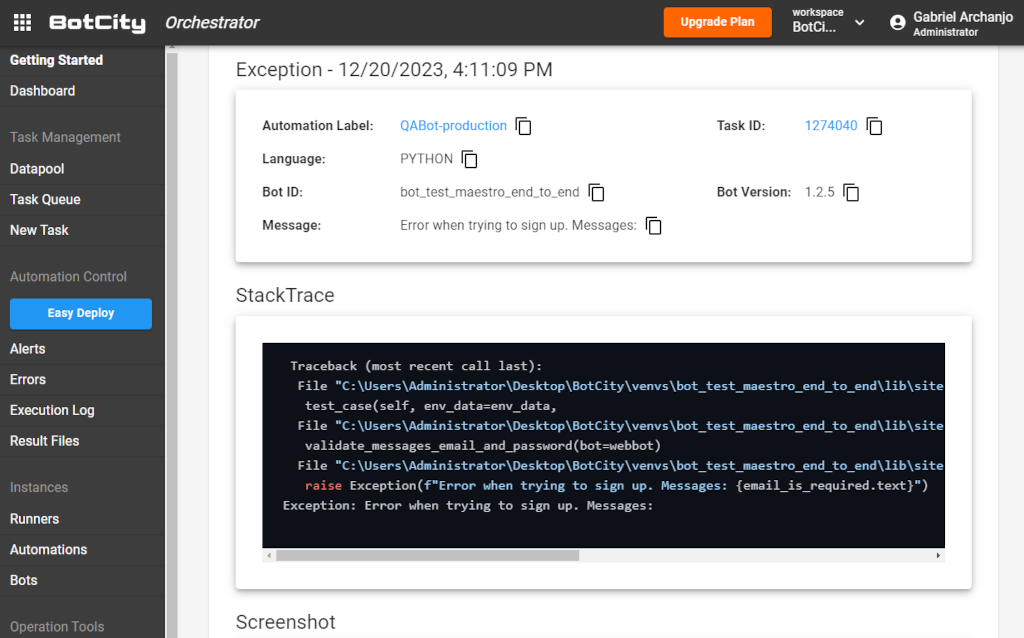
Using the BotCity Platform, your RPA team can promptly address automation errors or crashes. Every time your automation crashes, your team can see the screen where it crashed, the error traceback, and other additional information. Therefore, you can reduce the time for fixing and automation downtime.
3. Easier for Managing Deployments
Deploying a Python RPA is like deploying any other software. You just need a virtual environment with your automation dependencies in the runtime environment. BotCity Orchestrator provides a seamless process for deploying automations’ new versions and managing virtual environments automatically. You just need to install BotCity Runner in your Virtual Machine or Container, and it will be responsible for getting tasks on the queue, downloading the proper Python automation, and invoking the Python interpreter in the correct virtual environment.
4. Easier for Advanced Orchestration
Removing many proprietary components and protocols found in low-code platforms makes the orchestration process more accessible and transparent. BotCity Orchestrator provides enterprise-level management for your RPA Initiative based in Python.